
Big Brother and the Geopolitics of the 21st Century
Recently, I came across the hashtag which gives this article its title. Coincidentally, I had just finished reading 1984, by George Orwell, a few months ago. Originally published in 1949, the book presents a world devastated by decades of global war, civil conflict and revolution. What was formerly known as the island of Great Britain has become “Runway One” (Airstrip One), a province of Oceania — one of the three totalitarian superstates that rule the globe.
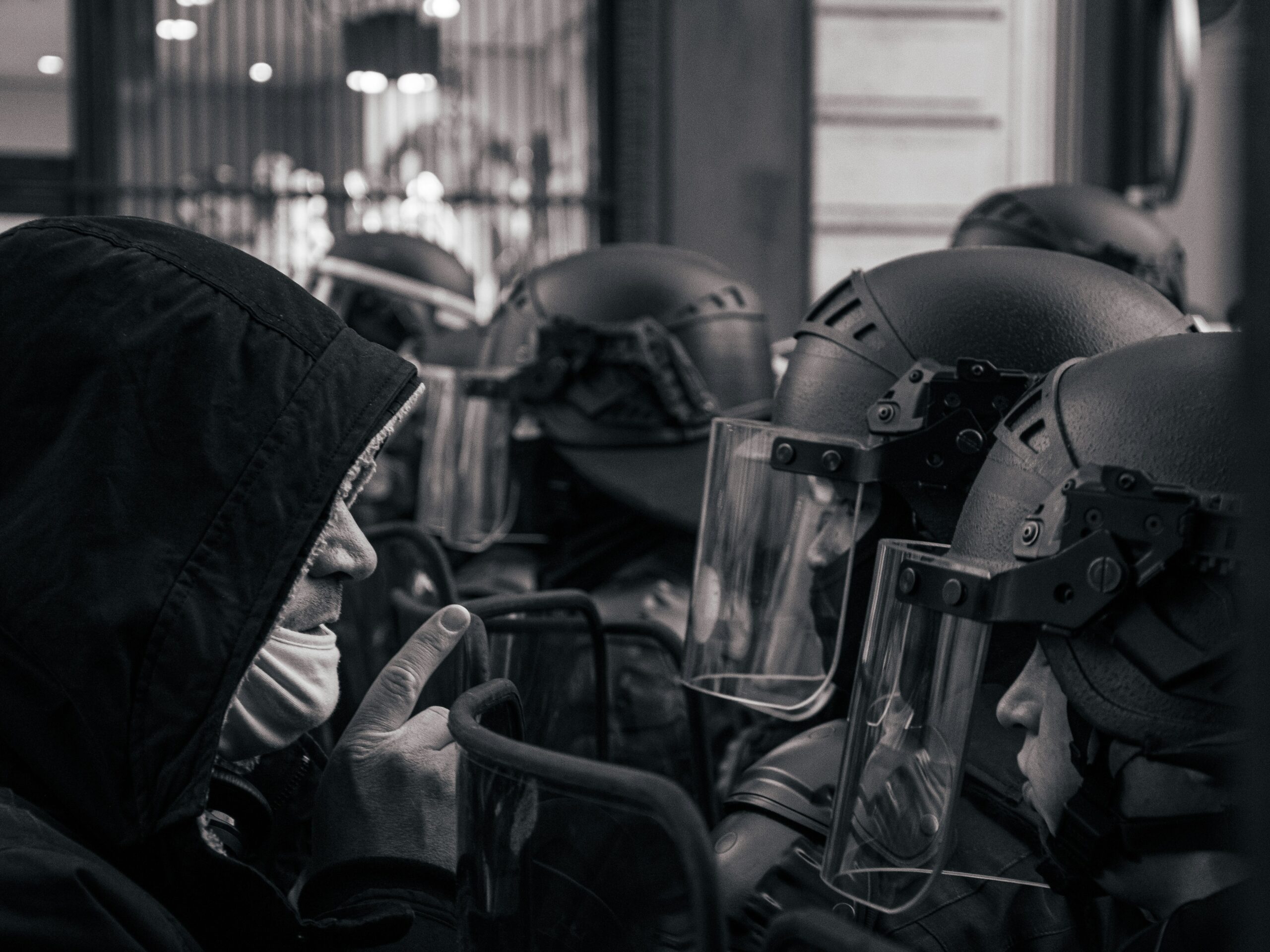
In this scenario, the ‘Party’ exercises power under the ideology of ‘Ingsoc’ (an acronym for English Socialism), personified in the omnipresent figure of Big Brother and intense personality cult. The regime brutally purges any dissent through the Thought Police and omnipresent surveillance, using telescreens, cameras, and hidden microphones. Those who fall out of favour become ‘non-persons’: they disappear from the face of the Earth, and all evidence of their existence is meticulously destroyed.
In London, Winston Smith, a member of the Outer Party, works at the Ministry of Truth. His job is to rewrite historical records to align them with the changing version of official history. Smith reviews previous editions of the The Times while the original documents are incinerated in the ‘memory holes’. Secretly, he opposes the regime and dreams of rebellion, aware that the simple act of doubting already makes him a ‘thought criminal’.
It is impressive how a work written almost eighty years ago anticipates such vivid elements of the present moment. Using analogy as a tool for debate, I will offer reflections based on Orwell's work and an invitation to review the promises for this year, which is already beginning with events that cry out for space in December's retrospectives. To paraphrase Homer Simpson's sarcasm: ‘These are the events that have already secured their place in the retrospectives... for now.’ Certainly, there is much more to come.
“If everyone else accepted the lie that the Party imposed — if all records told the same story — then the lie would pass into history and become truth.”
Orwell's maxim has never been so palpable. The phenomenon is not new: in 2016, the magazine The Economist stamped on its cover ‘Art of the lie: Post-truth politics in the age of social media’. The article highlighted how discourse inflames prejudice and relegates objective facts to a secondary role, prioritising emotion in shaping public opinion. However, the attacks on institutions in Washington (2021) and Brasília (2023) raised the tone; these were not mere physical invasions, but symptoms of a systemic rupture towards closed blocs and the abandonment of multilateralism.
The Invasion of Reality and the Algorithmic Ministry of Truth
Still in the atmosphere of New Year's Eve 2026, we were surprised by the military intervention in Venezuela to capture Nicolás Maduro. What makes this event unique is the rise of ‘Synthetic Truth’: videos generated by Artificial Intelligence about the capture went viral before any factual verification. In 2026, the modern Ministry of Truth no longer needs to burn books; it saturates the digital environment with algorithmically generated versions that render the actual facts irrelevant in relation to the viral narrative.
If the image confirms the viewer's bias, it becomes the absolute truth. This institutional dissolution echoes the Orwellian division into superstates (Oceania, Eurasia, and Eastasia). Claims of hemispheric dominance over the Americas and plans to acquire sovereign territories, such as Greenland, signal a return to 19th-century geopolitics, but operate with 21st-century tools of manipulation.
Thomas Oatley's Systemic Logic: The Error of Reductionism
To understand the technical danger of this situation, we turn to the analysis of Thomas Oatley in his article “The Reductionist Gamble”Oatley argues that political science makes a fatal mistake when it analyses decisions solely through the prism of domestic pressures, ignoring the fact that such choices generate shock waves in complex global systems.
By ignoring international bodies or imposing unilateral decisions, leaders incur what Oatley calls Systemic inference bias:
- Inaccurate Knowledge: By focusing on immediate political gain and the applause of the electoral base, the chain reactions of the global system are ignored.
- Collapse of Interdependence: Institutions such as the WTO reduce global transaction costs. Withdrawing from them leads to a loss of influence over the rules that protect one's own currency and national exports.
For Brazil, the US's unilateral intervention compromised diplomatic stability and marginalised Brasília in strategic dialogues. While Brazilian diplomacy articulated rhetorical justifications for the neighbouring administration, brute force demonstrated the ineffectiveness of political narratives. However, the robustness of the agribusiness sector and the possession of strategic mineral reserves give Brazil distinctive resilience, allowing for autonomous trade relations with Asia and Europe. It is concluded that there is an imperative need to strengthen deterrence and self-defence capabilities to mitigate hegemonic pretensions that disregard multilateralism.
The Economics of Isolation: The Myth of “America First”
In 1984, the economy is deliberately kept in a state of scarcity for the purposes of social control. The ‘Ministry of Plenty’ announces fictitious increases while actual rations decrease. In contemporary reality, isolationist rhetoric operates under a similar logic: ‘full sovereignty’ is promised while the institutional infrastructure that sustains global prosperity is dismantled.
The impact is a scientifically calculable ‘shot in the foot.’ The leadership vacuum destabilises the dollar as a reserve currency and raises the domestic cost of living by disrupting supply chains.
Conclusion: Making 1984 Fiction Once More
The convergence between AI manipulation and institutional dismantling creates fertile ground for the collapse of political rationality. If truth becomes a by-product of algorithmic power, the price will be paid in individual freedom and economic stability.
“Freedom is the freedom to say that 2 + 2 = 4. If this is granted, everything else follows.”
The final provocation is: are we still able to recognise when fiction is written about our reality? In 1984, the ultimate goal of totalitarianism is to make individuals doubt their own senses in favour of Party dogma. In 2026, we urgently need to restore systemic processes of cooperation — before official history erases the possibility of any alternative.
Sources and References
Academic Articles
- Oatley, Thomas. “The Reductionist Gamble: Open Economy Politics in the Global Economy.” International Organization, vol. 65, no. 2, 2011, pp. 311-341.
Geopolitical News and Analysis
- The Economist. “What the ‘Donroe’ doctrine means for Brazil.” (15 de janeiro de 2026). Disponível em: economist.com
- Wikipédia. “Ataque ao Capitólio dos Estados Unidos em 2021.” Disponível em: pt.wikipedia.org
- Wikipédia. “Ataques de 8 de janeiro em Brasília.” Disponível em: pt.wikipedia.org
Literature and Culture
Wikipedia. “Nineteen Eighty-Four – Plot Summary and Analysis.” Disponível em: en.wikipedia.org
Statement on the use of AI:
This article was edited with Gemini 3.